
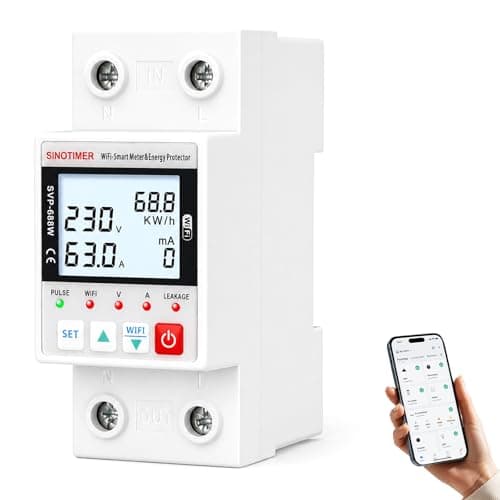
Smart Home Energy Monitor Circuit WiFi App: Complete Buyer's Guide
Monitoring your home's energy consumption has never been easier. A smart home energy monitor circuit with WiFi and app integration transforms how you understand and manage electricity usage across your household. Unlike traditional analog meters that offer no insight into consumption patterns, these intelligent devices provide real-time data, remote control capabilities, and automated protection features directly from your smartphone. Whether you're looking to lower utility bills, identify power-hungry appliances, or add an extra layer of electrical safety to your home, a WiFi energy monitor circuit bridges the gap between awareness and action. In this guide, we'll explore what makes these devices invaluable, how to choose the right one, and why they deserve a place in your smart home setup.
Our Top Picks for Smart Energy Monitor Circuits
Below is the leading smart home energy monitor circuit solution that combines comprehensive monitoring, WiFi connectivity, app control, and essential safety features for modern homes.
SINOTIMER
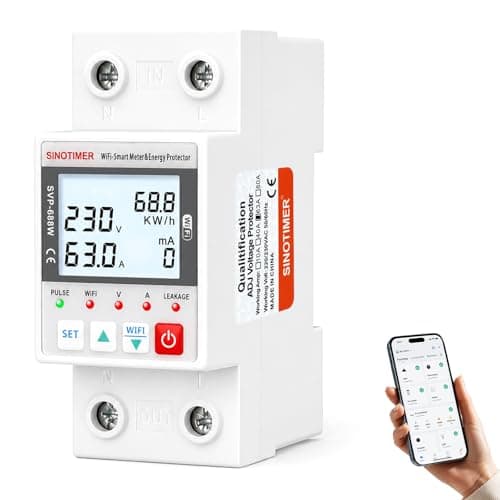
SINOTIMER WiFi Smart Energy Meter AC 63A 220VAC, WiFi Earth Leakage Over Under Voltage Protector, Circuit Breaker Din Rail, Electricity Energy Monitor APP Remote Control Smart Life
- Multifunctional Energy Meter & Protector – This meter monitors consumption with a large LCD for V/A/W; users can adjust under‑voltage (90‑190V, def.170V) & over‑voltage (230‑300V, def.270V), plus current limit, leakage protection, and reconnect time.
- Remote Control & Voice Control: You can control your home devices without time and distance limits via smartphone. App to check device power consumption at any time. The voice control function can be used in the Smart Life app as it is compatible with Google Home and Alexa.
- Timer and Scheduling Functionality: Turn on/off/timer/countdown the home appliance automatically according to your daily schedule.
- Energy value storage: This device has memory function, when the power is cut off, the device can memorize the value of Kwh, overvoltage, undervoltage and overcurrent.
* As an Amazon Associate we earn from qualifying purchases.
The SINOTIMER WiFi Smart Energy Meter stands out as a versatile all-in-one solution that goes far beyond simple energy tracking. It combines a multifunctional electricity meter with DIN rail installation, making it suitable for main panel integration or sub-circuit monitoring, while offering simultaneous voltage, current, and power display on its large LCD screen. The WiFi and app connectivity enables you to monitor consumption patterns anywhere, anytime, and adjust settings through the Smart Life app—plus it integrates with Google Home and Alexa for voice control convenience. Beyond monitoring, this device provides critical safety features including automatic protection against over-voltage, under-voltage, overcurrent, and earth leakage, with configurable thresholds and reconnection logic that prevents damage to sensitive electronics.
What to Look For in Smart Energy Monitor Circuits
WiFi Connectivity and App Integration
The quality of WiFi connectivity and smartphone app functionality determines how easily you'll access energy data and control settings. Look for devices that support dual-band WiFi (2.4GHz and 5GHz) for stable connections, real-time data updates, and compatibility with popular ecosystems like Smart Life, Google Home, and Alexa. A well-designed app should display consumption history, set alerts, create schedules, and offer at-a-glance dashboards without requiring frequent manual refreshes or clunky interfaces.
Voltage, Current, and Leakage Protection Features
A robust energy monitor circuit should include automatic protection against electrical anomalies such as over-voltage, under-voltage, overcurrent, and earth leakage. These safeguards prevent damage to appliances and reduce fire risk by cutting power supply when thresholds are exceeded. Configurable protection parameters and memory retention (so settings persist after power loss) are essential for households with varying electrical demands or locations prone to power fluctuations.
Accuracy and Data Logging Capabilities
Precision in energy measurement is crucial for identifying consumption trends and calculating potential savings. Select meters with high-accuracy sensors (typically Class 1 or Class 2 standards) that log historical data for days, weeks, or months. Built-in memory ensures that kilowatt-hour readings and fault events are retained even during power outages, allowing you to maintain complete consumption records without cloud dependency.
Installation Compatibility and Display Options
Verify that your chosen device fits your electrical setup—DIN rail mounting is standard for modern breaker panels, but some homes may require different installation methods. A large, readable LCD display showing voltage, current, power, and energy simultaneously reduces reliance on app-only monitoring. Check that the device supports your region's voltage standard (typically 110V or 230V) and handles your household's expected current draw (measured in amperes) safely.
How to Set Up Smart Home Energy Monitor Circuits in Your Smart Home
Installation of a WiFi energy monitor circuit typically begins with switching off power at your main breaker for safety. The device mounts directly on a DIN rail inside your electrical panel, with neutral, live, and earth connections following your local electrical code—if you're unsure, consult a licensed electrician. Once installed, download the Smart Life app, scan the device's QR code, and connect it to your home WiFi network. Configure protection thresholds for voltage limits and overcurrent sensitivity based on your household's typical usage. Finally, integrate the device with voice assistants and set up automation schedules through the app. This relatively straightforward process takes 15–30 minutes after installation and opens up a world of remote monitoring, energy insights, and automated safety controls that complement other smart climate and home automation investments.
How Smart Energy Monitor Circuits Compare to Other Smart Home Upgrades
While smart lighting and smart locks enhance convenience and security, energy monitor circuits offer measurable financial and safety returns. Unlike cosmetic upgrades, these devices directly reduce electricity costs by exposing consumption patterns and automating power management. A single energy monitor can save 10–15% annually on utility bills while protecting your entire home's electrical infrastructure—comparable value to premium smart security systems but with broader household impact. For most homeowners, an energy monitor circuit should rank as a core smart home foundation before adding luxury features.
Our Verdict
A smart home energy monitor circuit with WiFi app control is an essential upgrade for homeowners serious about energy efficiency, cost savings, and electrical safety. The SINOTIMER solution delivers comprehensive monitoring, reliable protection, and seamless app integration at an accessible price point. Whether your goal is understanding consumption patterns, automating power management, or preventing electrical damage, this category of devices offers unmatched ROI and practical benefits that justify installation today.
Frequently Asked Questions
Can I install a WiFi energy monitor circuit myself?
Installation inside your electrical panel requires turning off main power and working with live components, so professional installation is strongly recommended. Many electricians can install these devices quickly (often under an hour) at reasonable cost. If you're experienced with electrical work, manufacturer instructions are detailed, but always prioritize safety over DIY convenience.
How accurate are WiFi energy meters compared to utility company meters?
Smart energy monitors are typically Class 1 or Class 2 certified, meaning they're accurate within 0.5–2% of utility meters. This precision is sufficient for identifying consumption trends and detecting anomalies, though they won't replace official billing meters. Long-term monitoring through the app reveals patterns that utility bills alone cannot show.
What happens if my WiFi goes down—does the device still protect against electrical faults?
Yes, absolutely. WiFi connectivity only affects remote monitoring and app notifications; protection features like over-voltage, under-voltage, and overcurrent safeguards operate independently and don't require internet. The device will automatically cut power if faults occur, but you won't receive app alerts until WiFi reconnects.
Can I use a smart energy monitor circuit on a sub-panel or dedicated circuit?
Yes, these devices work on main panels, sub-panels, or individual circuits depending on your setup and the device's current rating. For main panel installation, verify the device's maximum amperage (typically 63A for standard residential use) matches your needs. Many homeowners install multiple monitors on different circuits to track specific appliances or zones.
Will a WiFi energy monitor circuit reduce my electricity bill?
Not directly—the monitor itself consumes minimal power. However, by revealing which appliances consume the most energy and enabling automated scheduling through the app, most users reduce consumption by 10–15% annually. The real savings come from behavioral changes and smart automation triggered by the insights the device provides.